Conference Program
The program is also available via the IES Conferences App, as PDF, and the web.
Keynote Speakers
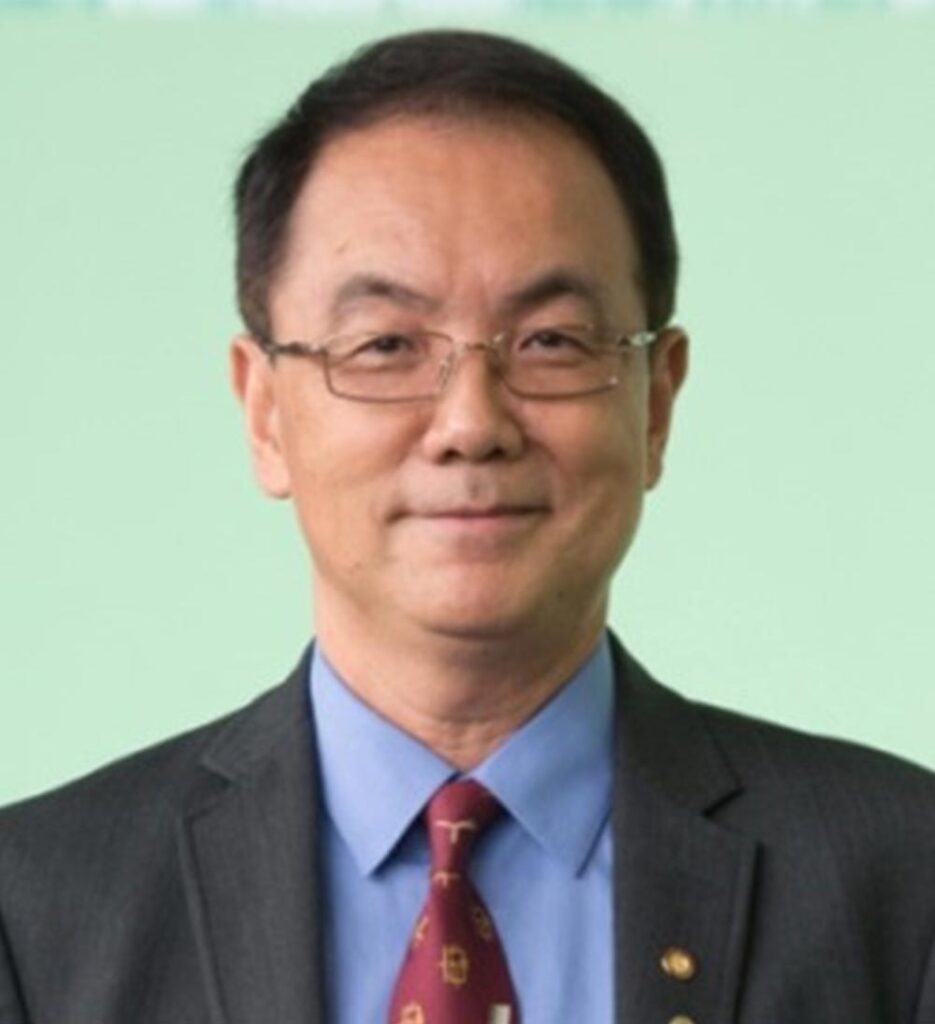
Keynote: Data Center Challenges: Powering “the AI Factories”
Data Center Challenges: Powering “the AI Factories”
Prof. Don Tan IEEE Vice President Technical Activities, Founder and CTO E2 Systems, USA
Wednesday, 04-Mar-2026
Abstract: As the GPU (TPU) computation cost plummeted by almost 100%, AI continues its march from generative to agentic. In the meantime, the demand for power is skyrocketing. Recent projections by Microsoft/Google/Meta forecast the power per rack is going from the current 100kW to the future 1MW. And the overall power demand for “AI factories” worldwide is doubling to be 1,000 TWh annually by 2030, as predicted by Delloitte. The ever-increasing power demand poses unprecedented challenges for the power, electronics, and computing industries. A brief history for powering computing industry is first recapped, followed by current challenges in power, thermal management, networking and workforce development. The power system architecture options are then presented, and key features for future architecture are discussed. Flexible electronic Large Power Transformers (FeLPTs) are emerging as a critical technology node. Key FeLPTs circuit options are discussed. Challenges in interfacing with power grids are detailed. Structured microgrids are natural candidates for efficient and effective data center power and energy management. Desired features for architecting the UPS systems, together with their required storage capacity, are then presented. In-rack and off-board power processing solutions are then proposed. Challenges in on-board power processing are elaborated, together with desired enabling characteristics for future sub-volt designs.
Speaker Bio: Dr. Tan is a member of the National Academy of Engineering, a fellow of the IEEE and a PhD from Caltech. He has served as a Distinguished Engineer, Fellow, Chief Engineer-Power Conversion, Program Manager, Senior Department Manager, and Center Director in a leading US Fortune 500 corporation. Unusually prolific as a visionary and impactful leader in ultra-efficient power conversion and electronic energy systems, Dr. Tan has pioneered breakthrough innovations with numerous high-impact industry firsts and record performances that received commendations from the highest level of the US Government. He has developed hundreds of designs and thousands of hardware units deployed for space systems without a single on-orbit failure. His suite of world-class electronics performed flawlessly on the James Webb Space Telescope (JWST), one million miles away, with world-record-breaking on-orbit performances, advancing humanity’s deep space understanding for years to come. Dr. Tan is the IEEE Technical Activities Vice President, 2026. He has served asthe founding President of IEEE Transportation Electrification Council, Chair of IEEE Fellow Advisory/Oversight Subcommittee, Vice Chair of IEEE Industry Engagement Committee, Division II Director, IEEE Board of Directors, Fellow Committee Chair, IEEE PELS/PES eGrid Steering Committee Chair, PELS Long Range Planning Committee Chair, Nomination Committee Chair, PELS President, founding Editor-in-Chief for IEEE Journal of Emerging and Selected Topics in Power Electronics, APEC (the fourth largest event in IEEE) General Chair, PELS Vice President-Operations, Guest Editor- in-Chief for IEEE Transactions on Power Electronics and IEEE Transactions on Industry Applications, Fellow Committee, PELS Vice President-Meetings, IEEE Chair for IEEE/Google Little Box Challenge (awarded $1M cash prize), and IEEE/DoD Working Group Chair, developed IEEE/ANSI standards 1515/1573. Don has delivered about 140+ keynotes/invited global presentations. He has received more than $30M external customer funding for research and technology development. He also serves on many prestigious national/international awards and review committees.
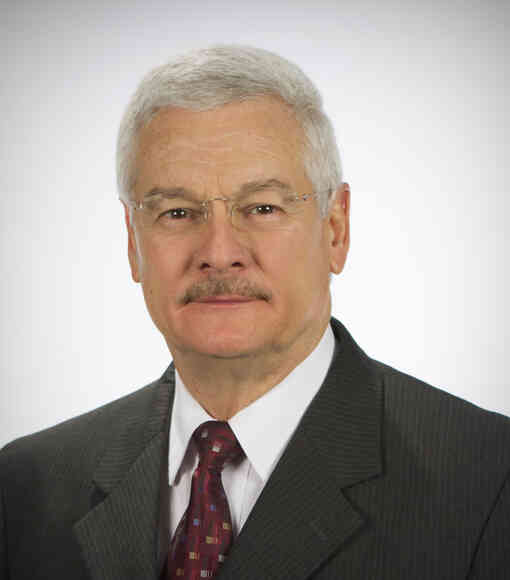
Keynote: Inverter-Based Resource Impacts on Electric Power Systems
Inverter-Based Resource Impacts on Electric Power Systems
Prof. Hector Altuve Ferrer Dean of SEL University at Schweitzer Engineering Laboratories, Mexico
Thursday, 05-Mar-2026
Abstract: I begin this presentation by describing the ongoing changes in electric power systems. I then introduce the inverter-based resources (IBRs) and explain the concept of inertia along with its influence on power system transient behavior. I compare electromechanical generators and IBRs to highlight key differences and explain system transient and frequency stability, and how increasing IBR penetration affects them. Next, I examine power system voltage stability and its sensitivity to high levels of IBR integration. I describe how fault contributions from IBRs differ from those of electromechanical generators, and finally, I address the impact of IBRs on power system protection and also present potential solutions to this challenge.
Speaker Bio: Héctor J. Altuve received his B.S.E.E. degree in 1969 from the Central University of Las Villas in Santa Clara, Cuba, and his Ph.D. degree in 1981 from Kiev Polytechnic Institute in Kiev, Ukraine. From 1969 until 1993, Dr. Altuve served on the faculty of the Electrical Engineering School at the Central University of Las Villas. From 1993 to 2000, he served as a professor of the Graduate Doctoral Program in the Mechanical and Electrical Engineering School at the Autonomous University of Nuevo León in Monterrey, Mexico. In 1999 through 2000, he was the Schweitzer Visiting Power Professor in the Department of Electrical and Computer Engineering at Washington State University. Dr. Altuve joined Schweitzer Engineering Laboratories, Inc. (SEL) in January 2001, where he is currently a distinguished engineer and dean of SEL University. He has authored and coauthored more than 100 technical papers and several books and holds four patents. His main research interests are in power system protection, control, and monitoring. Dr. Altuve is an IEEE life fellow.
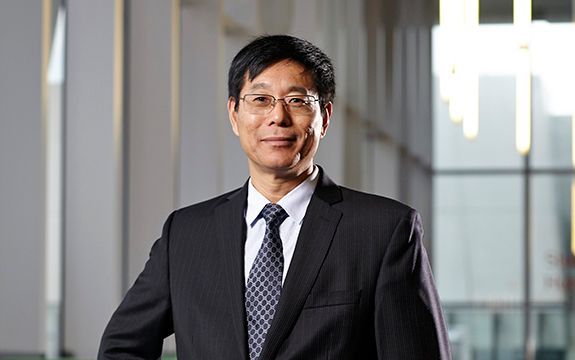
Keynote: Dynamic Event-Triggered Distributed Coordination Control
Dynamic Event-Triggered Distributed Coordination Control
Prof. Qinglong Han Pro Vice-Chancellor and Distinguished Professor at Swinburne University of Technology, Australia
Friday, 06-Mar-2026
Abstract: Distributed coordination control is the current trend in networked systems and finds prosperous applications across a variety of fields, such as smart grids and intelligent transportation systems. One fundamental issue in coordinating and controlling a large group of distributed and networked agents is the influence of intermittent inter-agent interactions caused by constrained communication resources. Event-triggered communication scheduling stands out as a promising enabler to strike a balance between the desired control performance and the satisfactory resource efficiency. What distinguishes dynamic event-triggered scheduling from traditional static event-triggered scheduling is that the triggering mechanism can be dynamically adjusted over time in accordance with both available system information and additional dynamic variables. This plenary lecture provides an up-to-date overview of dynamic event-triggered distributed coordination control. The motivation of dynamic event-triggered scheduling is first introduced in the context of distributed coordination control. Then, some techniques of dynamic event-triggered distributed coordination control are discussed in detail. Implementation and design issues are well addressed. Furthermore, this plenary lecture exemplifies two applications of dynamic event-triggered distributed coordination control in the fields of microgrids and automated vehicles. Several challenges are suggested to direct future research.
Speaker Bio: Professor Han is Pro Vice-Chancellor (Research Quality) and a Distinguished Professor at Swinburne University of Technology, Melbourne, Australia. He held various academic and management positions at Griffith University and Central Queensland University, Australia. Professor Han was awarded the 2024 IEEE Dr.-Ing. Eugene Mittelmann Achievement Award (the Highest Award in Industrial Electronics), the 2021 Norbert Wiener Award (the Highest Award in systems science and engineering, and cybernetics), the 2021 M. A. Sargent Medal (the Highest Award of the Electrical College Board of Engineers Australia), the IEEE Systems, Man, and Cybernetics Society Andrew P. Sage Best Transactions Paper Award in 2019, 2020, and 2022, respectively, the IEEE/CAA Journal of Automatica Sinica Norbert Wiener Review Award in 2021, and the IEEE Transactions on Industrial Informatics Outstanding Paper Award in 2020. Professor Han is a Member of the Academia Europaea (The Academy of Europe) (MAE). He is a Fellow of the Institute of Electrical and Electronics Engineers (FIEEE), a Fellow of the International Federation of Automatic Control (FIFAC), an Honorary Fellow of the Institution of Engineers Australia (HonFIEAust), and a Fellow of the Chinese Association of Automation (FCAA). He is a Highly Cited Researcher in both Engineering and Computer Science (Clarivate). He has served as an AdCom Member of IEEE Industrial Electronics Society (IES), a Member of IEEE IES Fellows Committee, a Member of IEEE IES Publications Committee, Chair of IEEE IES Technical Committee on Networked Control Systems, and the Co-Editor-in-Chief of IEEE Transactions on Industrial Informatics. He is currently the President-Elect, an Executive Board Member, and a Steering Committee Member of the Asian Control Association (ACA), and the Vice President of the Chinese Association of Automation (CAA). He is currently the Editor-in-Chief of IEEE/CAA Journal of Automatica Sinica and the Co-Editor of the Australian Journal of Electrical and Electronic Engineering.
Tutorials
- Recent Advances, Challenges and Future Trends of Machine Learning and Model Free Predictive Control Applied to Power Electronics
- Quantum-Resilient Security for Industrial 6G and Cyber-Physical Systems
For detailed information about the Industry Forum, please check the Tutorials page
Industry Forum
- AI-Driven Observability and Causal Correlation in Modern Operational Environments
- Manufacturing 3D Printable Filament with Poly-lactic acid (PLA) and Brewer Spent Grain (BSG)
- Intelligent Autonomy in Industrial Systems: Engineering Digital Twin based Multi-agent systems from Testbed to Production-ready systems
- Innovation through New Product Development: Steel Industry Insights
- Application of Data Analytics and IA for Product Quality in the Steel Industry
- Empowering Humanity: MicroMob and the Democratization of Sustainable Urban Transport
- Public Strategy for High-Impact Innovation: The Nuevo León Approach
For detailed information about the Industry Forum, please check the Industry Forum page
Conferences App
You are recommended to install the IES Conferences Mobile App, which is available in Google Play and on Apple App Store. The app provides access to the latest conference program and also to the PDFs of the conference papers (draft proceedings). After installation, you will need an Invitation Code, which has been sent via email to all registered participants of ICIT 2026.
Download on Google Play (Android Devices)
Download on Apple App Store (IOS Devices)